
A 3-Year-Old Girl Sent a Signal… The Soldier Understood Everything

Snow crunched beneath the heavy army boots.
As evening fell, fog spread low across the ground, as if covering the tracks of those who had vanished forever.
Somewhere in the distance, an owl hooted, and in that remote wilderness, its call sounded almost like a warning.
Junior Sergeant Alexei Sidorenko moved carefully, his rifle at the ready.
This was not just a reconnaissance mission—it was an operation on which lives depended.
The village he was heading toward had long been marked on maps as temporarily abandoned.
But intelligence reports suggested that civilians might still be hiding among the ruins, possibly even children.
As he drew closer, he saw that one house was still standing on its log supports. Its windows had been boarded up from the inside, and no smoke rose from the chimney.
He held his breath and waited.
Then something inexplicable happened.
A tiny figure peeked out from behind a water barrel—a little girl, no older than three.
She wore a light pink jacket. Her tangled blond hair framed her face, and something resembling a ribbon dangled around her neck.
She looked directly at him.
Not with fear.
No.
With a strange kind of knowledge.
Then she made a short motion with her hand, as if pointing to the left, toward a shed.
The gesture was so deliberate and precise that a chill ran through Alexei.
Quietly, he changed position and moved in the direction the girl had indicated.
His heart pounded, and his breathing slowed.
As he approached the shed, he heard voices inside speaking in a muted language—clearly not Ukrainian.
One voice was harsh and commanding.
The other was softer, more persuasive, but no less dangerous.
He immediately understood.
This was an enemy observation post disguised as an abandoned home.
The fact that the girl knew about it could mean only one thing—she had been near them for a long time.
And she understood who was friend and who was foe.
The sergeant sent a brief signal over the radio.
His support team was already moving toward him.
Within minutes, they surrounded the shed and neutralized two militants who had been planning sabotage operations against supply routes.
One of them carried a map marked with warehouses and humanitarian aid transportation routes.
That information could have cost hundreds of lives.
After the operation, Alexei returned to the barrel where he had last seen the little girl.
But she was gone.
The house was empty.
Only a stuffed teddy bear and a broken hairbrush lay in a corner.
He heard a soft rustling sound and turned around.
Standing in the shadow of the porch was a woman.
Exhausted.
Dark circles beneath her eyes.
She held the little girl tightly, as if afraid she might disappear.
“It was you,” the woman began in a trembling voice.
“You saved us.”
Alexei stepped closer.
The little girl looked at him again.
And now he saw something more than knowledge in her eyes.
There was memory.
Memory of what she had witnessed—fear, cruelty, lies, masks on the faces of people who promised candy and then carried her neighbors away into the darkness.
She did not say a single word.
But her silence spoke louder than any scream.
Command officially classified the operation as a success.
But Alexei could not forget the gaze of that three-year-old child.
One question haunted him:
How many more children like her were living in the shadows, learning to stay silent, to hide, and to send a signal at the critical moment—one that adults were obligated to understand?
He transferred the mother and child to a safe camp.
They were given housing, food, and medical care.
The little girl still did not speak.
Doctors attributed it to psychological trauma.
Alexei visited them every day.
He brought toys and books.
He drew little soldiers on paper for her.
He never tried to force conversation.
He simply stayed nearby.
One day, nearly three weeks later, the girl picked up a pencil and carefully drew a house.
Beside it stood a figure in uniform carrying a rifle and a backpack.
Next to him was a small girl with one hand raised.
She handed the drawing to Alexei.
He could not hold back his tears.
He understood.
For her, that moment had become a symbol of choice.
A symbol that even in a shattered world, someone could send a signal and be heard.
He hung the drawing in his barracks between a map of the area and a list of assignments.
Soldiers passing by would stop and look at it.
Some smiled.
Others became thoughtful.
And some quietly turned away, as if unwilling to face the truth carried by that child’s raised hand—a hand lifted not in play, but in a silent plea for rescue.
Alexei never understood why this particular story settled so deeply in his soul.
He had participated in dozens of operations.
He had seen suffering, death, and unimaginable injustice.
But this was different.
It was a quiet, wordless truth expressed through the movement of a tiny hand that changed everything.
There were no grand speeches.
No heroic charge.
There was only a little girl who decided to believe someone would understand her.
One day, as usual, Alexei arrived at the camp carrying a bag of tangerines and a notebook.
The girl’s mother, looking slightly more alive than before, sat by the window reading a book.
The little girl, to Alexei’s surprise, was painting instead of drawing with pencils.
On the paper appeared something resembling the sun.
But the colors were strange.
Instead of yellow, it was painted red and gray.
He sat beside her.
“What do you think it is—a sun or an explosion?” the girl’s mother suddenly asked without taking her eyes off the painting.
“I think, for her, they’re the same thing,” Alexei replied quietly.
“She still doesn’t know the difference between what brings light and what brings fire.”
The mother nodded.
“But you became something that separates those two ideas for her.
Whenever she draws you, the sun is always yellow.”
He remained silent.
To stand between fear and safety—wasn’t that the essence of his profession?
Yet never before had he felt such a clear responsibility, earned through suffering and entrusted without words.
Several months passed.
The little girl began to speak.
First, she whispered in her sleep.
Then she said individual words.
Her mother told him that the first conscious word she spoke was “light.”
And then came “Lyosha.”
She could not pronounce Alexei, so she called him by her own version of his name, as if shortening the distance between them.
By spring, when the snow began to melt and streams ran from the rooftops, the camp gradually emptied.
People were relocated to more stable regions.
Alexei received orders to return to headquarters and prepare his report on the completed mission.
He came to say goodbye.
The girl sat on a swing he had built himself from old boards and rope.
When she saw him, she jumped down and ran over.
“Lyosha, will you come back?” she asked softly.
He lowered himself onto one knee and looked into her eyes.
“Whenever you send a signal,” he said, squeezing her hand.
She handed him another drawing.
In it, the two of them stood together.
She held a ball.
He held a radio high toward the sky, and light flowed from it, as if the antenna were receiving signals not only from the earth, but from the human soul itself.
He placed the drawing in his breast pocket and walked away without looking back.
He knew that if he turned around, he would not be able to leave.
But his heart remained there—in the camp, in a child’s whisper, in the small hand that had finally returned to play.
Back at the base, he struggled to find himself again.
His thoughts constantly drifted back to that isolated village where a child had once saved an entire operation.
He began writing the report.
But every time he reached the part about the girl’s gesture, he stopped.
How could he explain it in dry military language?
So he decided to write the report differently.
He recorded the events as a story—not for documentation, but for memory.
Soon, copies of the document spread from unit to unit like a legend.
Soldiers read it and reflected on it.
Commanders passed it around during meetings.
One day, a general approached him.
“Is it true?”
“Every word.”
“Do you know the most frightening thing about this story?”
“What?”
“That a three-year-old girl turned out to be more observant and braver than some adults.”
The general shook Alexei’s hand.
“I want you to go to the training center.
You need to tell this story.
Cadets must understand that intuition and attention to detail are not just words in a manual.
Sometimes salvation comes from where we least expect it.
You must teach them how to see signals.”
Alexei did not want to leave the front line.
But he understood.
This was not a retreat.
It was a new mission.
His voice would become an echo of that raised hand.
He agreed.
And on his very first day standing before a room of young recruits, he began with a simple sentence:
“One day, a three-year-old girl sent a signal.
And I understood everything.”
Silence filled the room.
Alexei slowly looked across the faces of the cadets.
Some smiled skeptically.
Some narrowed their eyes with curiosity.
Others simply stared, unblinking, as if the words had struck directly at their hearts.
He paused, opened his field folder, and pulled out a folded sheet of paper—the drawing of the little girl and the radio emitting light.
“This is not a souvenir,” he said.
“It is a reminder.”
The room seemed warmer somehow.
He told the story.
Without rushing.
Without drama.
As a witness, not a hero.
He spoke about the fog.
The girl’s eyes.
Her hand gesture.
The fear that had stayed beside her for so long that she had learned to recognize it better than adults.
He spoke about the silence of the shed, where foreign languages and fragments of deadly plans echoed in the darkness.
He spoke, and no one even blinked.
“Learn to see.
Not with your eyes—with your heart.
Intuition is not mysticism.
It is a skill developed through experience and attention.
We teach you to shoot, to disarm threats, to plan operations.
But none of that matters if you walk past a little girl reaching out her hand and fail to notice because you are too busy preparing your report.
Sometimes salvation is not in the paperwork.
It is in a glance.”
Then he fell silent and squeezed the drawing in his fingers.
“And yes,” he said quietly, “she saved me too.
Because without her, I might have entered that shed alone.
And never come back out.”
After the session, the quietest cadet approached him.
He was a fit young man, about twenty years old, with unspoken pain hidden in his eyes.
“Permission to ask a question, Sergeant?”
“Of course.”
“What if she hadn’t given the signal?
What would you have done?”
Alexei looked at him silently before answering.
“I would have kept walking.
And perhaps I would never have lived long enough to hear that question.”
The young man nodded and walked away.
A few days later, during a nighttime navigation exercise, that same cadet was the first to notice an old ribbon tied to a tree.
It nearly blended into the bark.
But it was tied too neatly to be natural—as if a child’s hand had left a trace.
The ribbon led to the basement of an old farm where a family was hiding.
A mother.
Three children.
And a grandfather.
They had nowhere else to go.
They had simply hoped someone would find them.
And so the stories intertwined.
One gesture gave birth to another.
One saved life inspired the saving of more lives.
No one ever learned the little girl’s real name.
In camp records, she was listed only as “Girl from Sector B.”
Among themselves, the soldiers began calling her “Palm.”
Time passed.
Alexei continued working at the training center, occasionally traveling to operational zones.
He carried an album filled with children’s drawings—those he had met, those he had saved, and those he had lost.
They became his second field manual.
For every drawing, he could tell a story.
And with each story, his heart became a little softer, a little more attentive.
Then, nearly two years after that operation, he received a letter.
The handwriting was childish, uncertain, full of mistakes.
It began:
“Hello, Lyosha.
I go to school now.
I like drawing and looking at the sky.
Mom says you saved us.
But I remember—you just understood.
I want you to know that now, when someone sends a signal, I see it too.”
Alexei held the letter in his hands for a long time.
Then he carefully placed it in the album between the drawing with the radio and a new drawing he had just begun.
The new picture showed the sea.
On the shore stood two silhouettes—one adult and one child.
Both looked toward the horizon.
Between them shone a bright point of light, like a signal sent into the sky.
Not desperate.
Not alarming.
Simply human.
A sign that someone is nearby.
Someone hears.
Someone understands.
That same night, sitting in darkness, he opened the letter again and traced the uneven lines with his fingers.
For a moment, he thought he heard a voice.
A quiet child’s voice.
Somewhere between sleep and memory.
“Lyosha, you remember, don’t you?”
Without opening his eyes, he nodded.
Yes.
He remembered.
And he always would.
More years passed.
The war slowly receded like black floodwater, leaving behind only the smell of dampness, ruins, and memories that refused to die.
The country began rebuilding.
So did those who had managed to survive not only in body, but in spirit.
Alexei no longer wore a uniform.
He taught at the Officer Training Institute, leading a course called “Humanity in Conditions of Conflict.”
It was a strange, almost paradoxical title that initially made young students smile.
By the end of the semester, however, it earned respect and quiet gratitude.
During one of his final lectures, he told the story one last time.
He no longer read from notes.
He no longer looked at the album.
He spoke from memory.
And he repeated the words he had once said to himself in that snow-covered village:
“If a child gives you a signal, it is not a game.
It is a cry that says faith in the world still exists.
Hear it, and you will save more than the child.
You will save yourself.
Period.”
After the lecture, a young woman approached him.
She was slender and composed.
Around her neck was a scarf embroidered with a sun and the silhouette of a person holding a radio.
She stood silently for a long moment.
Then she said:
“My name is Maria.
Once, you used to call me Palm.”
He froze.
His heart struck once like a hammer.
Then again.
“You…”
“I gave the signal.
And you heard it.
I grew up.
I remember everything.
Even the things I didn’t understand back then.”
Words failed him.
He wanted to tell her that he had carried her drawing all those years.
That he had taught people to pay attention because of her.
That every step he had taken since then had been a step toward understanding that single gesture.
Instead, he simply embraced her.
Without words.
Like a father returned from forgotten dreams.
“Why did you come?” he asked quietly.
“To tell you that now I’m learning to save people too.
I was accepted into medical school.
I don’t want children to live in fear.
I want them to send signals because they had a bad dream—not because death is standing nearby.”
He smiled.
And in that moment there was everything:
The tears he had never allowed himself to shed.
And the hope he had been afraid to believe in.
The story had come full circle.
The little girl he once saw through smoke and the sights of a rifle now stood before him—grown, strong, and carrying light herself.
Not as someone who had been saved.
But as a savior.
Before leaving, she handed him a new drawing.
It showed a classroom.
A teacher stood at the board.
Beside him were boys and girls in uniform carrying radios.
On the wall hung a poster that read:
“If you see someone remaining silent, it may be the loudest signal of your life.
Hear it.”
In the corner was a small signature:
“Maria.”
The girl who had once pointed with her hand.
He left the building and sat beneath an old oak tree.
A bird circled high above—perhaps a hawk, perhaps an eagle. It was hard to tell.
The wind carried the scent of spring.
And within that wind, he could hear the breathing of time.
Everything that had once seemed accidental had formed a chain.
One gesture.
One raised hand.
One glance through falling snow.
And the fate of an entire family, an entire operation, and an entire life had changed forever.
His story was no longer merely a report.
No longer only a lesson for cadets.
It had become a myth.
Not the kind people forget.
The kind they pass on like a banner.
Like a prayer.
Like a reminder.
He closed his eyes and thought:
“If I ever forget what a child’s silence sounds like, I will lose the right to call myself human.
But as long as there is even one child in this world who can send a signal, and someone willing to hear it, hope remains alive.”
And so the story ended—not with an ending, but with a new beginning.
Because anyone who hears it can become that same Lyosha.
The one who hears a scream hidden inside silence.
The one who sees meaning in a gesture.
The one who does not walk past.
A story in which one little girl changed everything.
Not with a weapon.
Not with words.
But with a raised hand.
Related Post

My Husband Passed Away on Our 28th Anniversary – A Few Days Later, My Daughter Came to Me and Said, ‘Mom, Dad Left This Under My Apartment Door the Day Before He Was Gone’
I thought losing my husband on our anniversary would be the hardest moment of my [...]

My husband had spent eight years desperately wishing for a son. But when he finally held our newborn boy and noticed a tiny mark on his back, his joy vanished. He looked at me and said, “That baby isn’t mine.” What we uncovered afterward exposed a family secret that had been buried for decades.
“That baby is not mine.” Ricardo said it quietly, but inside the hospital room, the [...]
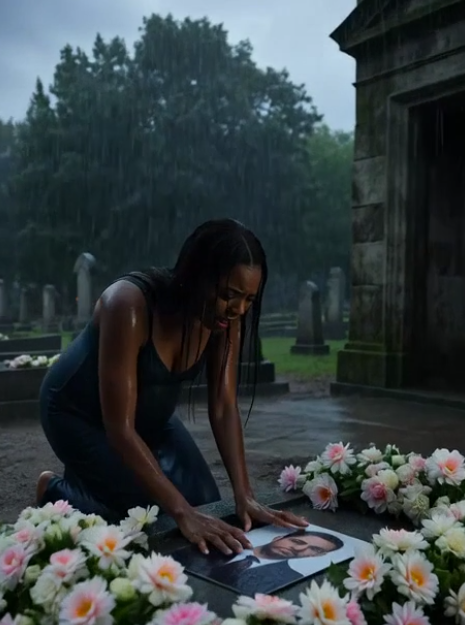
When a pregnant orphan visited her fiancé’s grave, she found a strange phone — and after turning it on, she lost consciousness.
Olesya stepped heavily down from the bus. So, she had finally arrived in the city [...]