
I Thought My Wife Was Too Weak to Leave Me
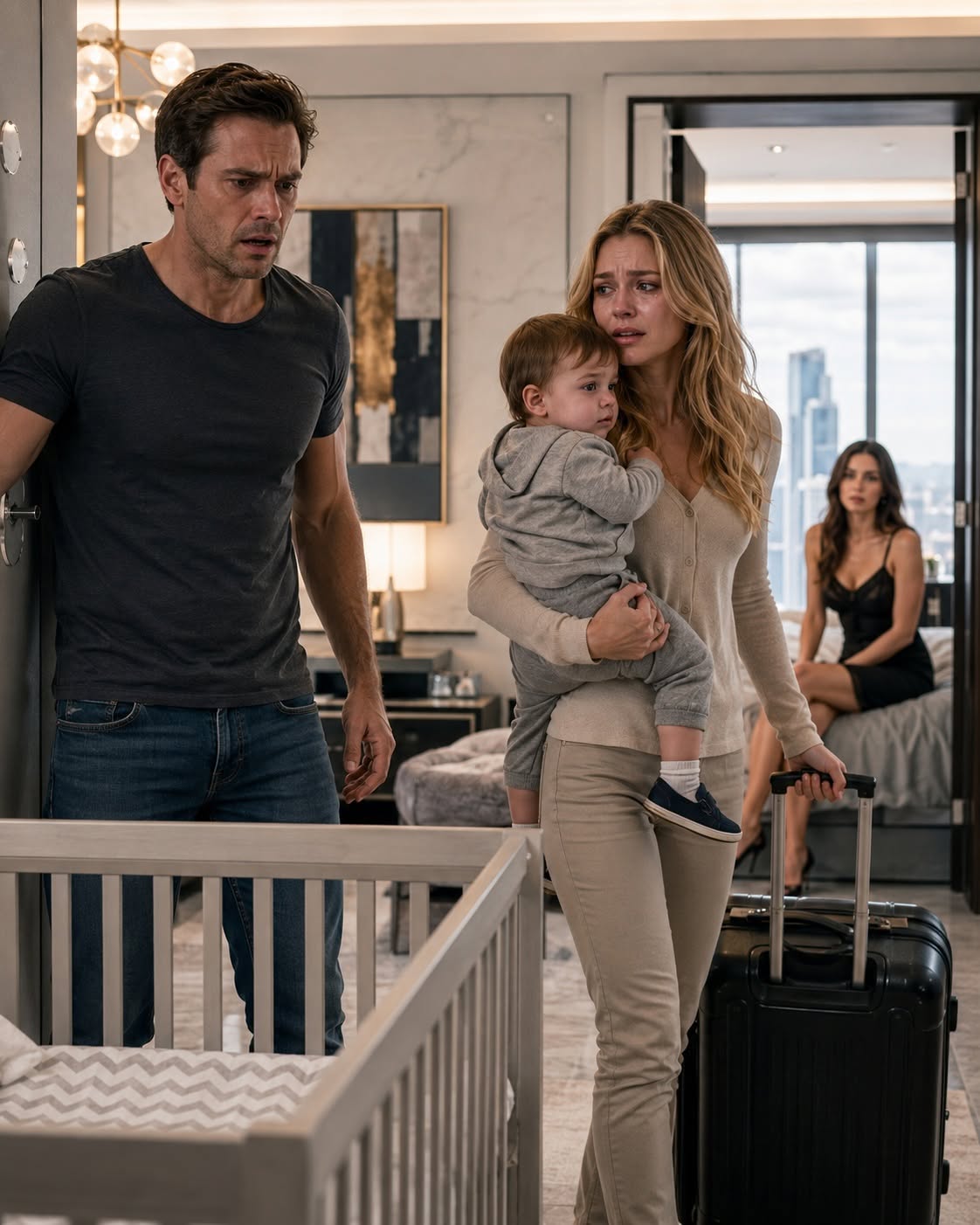
I didn’t open the envelope right away.
That was the first thing I remember clearly after Detective Cole slid it across the table—the pause.
Not because I was brave.
Not because I was thinking strategically.
Because some part of me already understood that whatever Emily had written would be more honest than anything I had allowed myself to hear in years.
The envelope sat between us on the metal table, pale cream paper under the cold fluorescent lights. Emily had always liked nice stationery. Even grocery lists, she wrote neatly, the letters sloping just slightly to the right. When we first started dating, I used to tease her about it.
“You write like someone expecting historians to preserve your notes,” I had said once.
She had smiled and tucked a strand of hair behind her ear. “Maybe I just believe words deserve care.”
Back then, I thought that was charming.
Later, I thought it was sentimental.
Now, staring at my name in her careful handwriting, I realized I had never really understood her at all.
Detective Cole didn’t rush me. He leaned back in his chair and watched with a patience that made me
feel more exposed than any accusation could have. He was in his late forties, maybe early fifties, with graying hair and tired eyes that had clearly sat across from men like me before—men who arrived loud and wounded, certain they were the injured party, only to discover they had misunderstood the
entire room.
“Is this evidence?” I asked, my voice rough.
“It was left for you,” he said.
“Then why do you have it?”
“Because you filed a missing persons report involving your wife and infant son. We needed to secure what was found at the residence. There was no sign of forced entry. No signs of struggle. No
indication your wife or child were taken against their will.”
“You don’t know that.”
His gaze didn’t move. “We’re looking at all possibilities.”
But he said it like a courtesy, not a belief.
I stared down at the envelope again.
“Do you know what’s inside?”
“No.”
“You didn’t read it?”
“It wasn’t addressed to me.”
For some reason, that angered me. Maybe because a stranger was respecting Emily’s boundaries better than I ever had.
I picked up the envelope. My fingers left faint streaks of dried blood along the edge from where I’d
hit the nursery doorframe. Seeing it there—my blood on her careful handwriting—made me feel sick.
The seal opened with a soft tear.
Inside were three pages, folded with precision.
I unfolded them slowly.
Daniel,
By the time you read this, Noah and I will be somewhere safe.
I stopped breathing.
Safe.
The word struck me harder than any accusation. Safe from what? From me?
My instinct was to reject it immediately, to fling the letter back on the table and say this was absurd. I had never touched Emily. Never raised a hand to her. Never threatened her. I wasn’t some monster from a late-night documentary.
But the letter continued.
I know what you will say first. You will say I overreacted. You will say I should have talked to you. You will say this could have been handled like adults.
I wanted to laugh because she was right. Those were exactly the things I had already been rehearsing.
But you have spent years teaching me that when I talk, you do not listen. When I cry, you become
annoyed. When I explain, you correct my memory. When I ask for help, you remind me how much pressure you’re under.
I read the line twice.
Then a third time.
Detective Cole remained silent across from me.
I forced myself to continue.
I did not leave because of Vanessa.
My jaw tightened.
So she had written the name.
The affair hurt me, yes. It humiliated me. It broke something I had tried very hard to protect. But it was not the beginning. It was only the proof.
I left because I finally understood that Noah and I could not heal in the same house where I was
disappearing.
For a moment, I couldn’t make sense of the words.
Disappearing.
Emily had been there every day. In the kitchen. In the nursery. On the couch at midnight with Noah asleep on her chest. She was the fixed point around which my life had rotated. I came and went, lied and returned, complained and expected comfort, and she remained.
How could she call that disappearing?
The next paragraph answered before I could dismiss it.
Do you remember the night Noah had a fever and I asked you to hold him for ten minutes so I could
shower? You said you had an early meeting. You went upstairs, closed the door, and I sat on the bathroom floor with him because I was too tired to stand.
I remembered saying something about a meeting.
I did not remember the bathroom floor.
Do you remember my birthday this year? You texted from the office at nine p.m. and said the day got away from you. You had dinner that night at Liora with Vanessa. I know because the charge posted
before you remembered to use the other card.
My face burned.
Do you remember when I asked whether you still loved me, and you said, “Don’t start”? I laughed
afterward because Noah was watching us from his bouncer, smiling at the ceiling fan. I did not want his first memories of love to sound like that.
I lowered the letter.
The room had gone hazy around the edges.
Detective Cole’s voice came quietly. “You all right?”
I wanted to say yes.
Instead, I said nothing.
There was more.
I am not trying to punish you. I am not trying to erase you from Noah’s life. But I will not let you use
him to keep control of mine.
I have spoken with an attorney. You will receive notice through proper channels. There will be arrangements, and they will be legal. I will cooperate with the court. I will not hide Noah from the
law.
But I needed time to leave before you started performing regret.
That sentence stopped me cold.
Performing regret.
I looked up sharply, offended before I even understood why. “She makes it sound like I’m incapable of caring.”
Detective Cole didn’t respond.
“I do care,” I snapped.
He folded his hands on the table. “Then keep reading.”
I hated him in that moment. Not because he had done anything wrong, but because he was calm. Because he wasn’t impressed by my anger. Because the letter in my hands had more power over the room than I did.
I looked down again.
You are very convincing when you’re afraid of losing something. You become tender. You become apologetic. You promise to change. And for a little while, I would believe you because I wanted to
believe you.
But change that only appears when consequences arrive is not change. It is negotiation.
My throat tightened.
I wanted to argue with a piece of paper.
I wanted Emily in front of me so I could explain that marriage was complicated, that work had been stressful, that having a newborn had strained us both, that Vanessa had been a mistake, that none of
this had to become so dramatic.
But the more I read, the more those excuses sounded like furniture in a burning house—irrelevant, heavy, and impossible to save.
The letter shifted then. Her voice softened.
Noah is beautiful. He laughs in his sleep now. His left hand opens and closes when he dreams, like he is reaching for something. He likes the blue blanket your mother knitted, so I took it. I hope
someday you understand that I took it because it comforts him, not because I wanted to hurt you.
I pressed my fingers into my eyes.
My mother had knitted that blanket before she died. Pale blue, with uneven edges because arthritis
had made her hands stiff in the final months. Emily had cried when she opened it at the baby shower. I had been too busy answering emails to notice for more than a minute.
Now the blanket was gone.
Noah was gone.
And my mother, who had warned me gently two years earlier that “a patient woman is not an endless one,” was gone too.
I read the final section.
There is one thing I need you to know.
I did not leave alone.
That sentence made my pulse leap.
Detective Cole saw my expression change.
“What?” he asked.
I kept reading.
Not in the way you think. There is no other man. There is no dramatic secret lover waiting in the wings. There are only people who saw me clearly when you stopped looking.
Your sister called me in March.
My sister?
My grip tightened.
Rachel?
She said she was worried about me. I told her I was fine. She said, “That is what you say when you are not.” I cried for twenty minutes and apologized the entire time. She told me not to apologize for
being tired.
Rachel knew?
I felt as if the floor had tilted under my chair.
Your father also knows more than you think.
For a second, I could not move.
My father?
That was impossible. My father and I were not close in the sentimental way Emily and her mother were, but he was my father. Quiet, practical, old-school. He had taught me how to change a tire, how to shake hands firmly, how not to complain unless I had a solution.
He wouldn’t have hidden this from me.
He wouldn’t have chosen Emily over his own son.
Would he?
I read faster now, each line becoming a door I did not want opened.
He came by while you were in “Portland” last month. Noah was crying, and I had not slept more than two hours. I broke down. He did not say much. You know how he is. But before he left, he said, “A
man can fail his family loudly or quietly. Quiet failure still counts.”
I stared at those words.
They sounded exactly like my father.
I could hear his gravelly voice saying them.
The shame that followed was different from the shame about Vanessa. Deeper. Older. It reached into places I had avoided since childhood.
My father had seen me.
Not the version I presented at work. Not the polished husband in holiday photos. Not the father posting one carefully framed picture of Noah’s tiny hand around my finger.
He had seen the quiet failure.
The letter’s final lines were brief.
Do not come looking for me in anger.
Do not call my mother and frighten her.
Do not make this harder than it has to be.
For Noah’s sake, become someone he can safely love.
Emily
Below her name, in smaller writing, she had added one more sentence.
The truth you are searching for is in the places you never bothered to look.
I read that line again and again until the words blurred.
“What does that mean?” I whispered.
Detective Cole didn’t answer.
Of course he didn’t.
It wasn’t his riddle.
It was mine.
By the time I left the station, the sun had slipped behind a low ceiling of clouds. Seattle rain misted against my windshield, turning the world silver and indistinct. I sat in the parking lot for nearly twenty minutes with the engine running, Emily’s letter open on the passenger seat.
My phone vibrated constantly.
Vanessa.
Michael Ross.
My office.
Vanessa again.
I ignored them all until my father’s name appeared.
For reasons I couldn’t explain, I almost didn’t answer. My thumb hovered over the screen while rain gathered in tiny beads along the glass.
Then I pressed accept.
“Daniel,” my father said.
Not Danny. Not son.
Daniel.
“You knew,” I said.
A pause.
“Yes.”
The simplicity of it hit like a slap.
“You knew Emily was leaving?”
“I knew she was thinking about it.”
“And you didn’t tell me?”
“No.”
I laughed once, bitterly. “Unbelievable.”
My father breathed out slowly. In the background, I heard the low hum of his television, probably the news with the volume turned down. Since my mother died, he kept the TV on most of the day, not to watch it but to keep the house from sounding empty.
“You weren’t listening to anyone, Daniel.”
“She’s my wife.”
“She is a person before she is your wife.”
I closed my eyes.
“Don’t give me one of your lectures.”
“I’m not lecturing.”
“You hid this from me.”
“I kept a confidence from a frightened woman holding my grandson.”
That silenced me.
Frustration flared because I wanted to argue. I wanted to call the word frightened an exaggeration. But Emily’s letter sat inches away, patient and devastating.
“I didn’t hurt her,” I said.
My father was quiet for so long I checked to see if the call had dropped.
Then he said, “There are many ways to make a home unsafe.”
I gripped the steering wheel.
“You think I’m a bad man?”
“I think you have been a careless one.”
Careless.
Somehow it was worse.
A bad man could be rejected cleanly. A careless one had to account for every small neglected moment, every wound dismissed because it did not bleed where others could see.
“Where is she?” I asked.
“I don’t know.”
“Dad.”
“I don’t know,” he repeated. “And if I did, I wouldn’t tell you while you sound like this.”
“Like what?”
“Like a man more interested in getting his life back than understanding why it left.”
I hung up.
Not because he was wrong.
Because I was afraid he was right.
At home, the silence had changed.
That morning it had felt like an ambush. By evening, it felt like evidence.
I stood in the entryway, keys in hand, staring at the shoes lined neatly by the door. Mine were there,
polished and expensive. Emily’s were gone. So were the tiny soft booties she used to joke Noah would outgrow before he wore twice.
In the living room, the framed photos remained. Our wedding picture on the mantel. Emily in lace,
smiling up at me as if I were the safest place in the world. Me, younger and leaner, looking proud.
Not loving, I noticed now.
Proud.
Like I had accomplished something.
I walked closer and picked up the frame.
In the photo, Emily’s hand rested against my chest. Her wedding ring caught the light. I remembered
that day in fragments—the garden, the string quartet, my mother crying, my father clapping me on the shoulder and saying, “Take care of her.”
I had thought that meant provide.
Mortgage. Insurance. Retirement accounts. A nice car. A good neighborhood. Vacations when schedules allowed.
I had mistaken provision for presence.
The thought made me set the frame down carefully, as if it might break from the truth alone.
In the kitchen, her ring still sat on the counter.
The police had photographed it but left it behind. I stood over it for a long time.
It was simple, delicate, a thin gold band with a small diamond I had once apologized for not being bigger. Emily had laughed then and said, “I don’t want a ring that makes my hand feel owned.”
I had forgotten that.
Or ignored it.
My phone buzzed again.
Vanessa.
This time, I answered.
“Daniel,” she said, breathless. “Finally. What is going on? I’ve called you all day.”
“Emily left.”
Silence.
Then, softly, “Oh.”
That single syllable told me she had expected this possibility, even if I hadn’t.
“You knew she knew?” I asked.
“What?”
“Did you know Emily knew about us?”
A pause.
Too long.
My stomach turned. “Vanessa.”
“I suspected,” she admitted.
“You suspected?”
“She came to the gallery.”
The words landed strangely. “What gallery?”
“My gallery. In Bellevue. About two months ago.”
I sank into a kitchen chair.
Vanessa worked in art consulting. That was what she called it, though much of her time seemed to involve wealthy clients, private showings, and rooms where everyone held wine glasses they barely drank from.
“She came to see you?” I asked.
“She said she was looking for a piece for your office.”
“My office?”
“I didn’t know who she was at first.”
“But she knew who you were.”
“I think so.”
The room tilted again.
Emily, walking into Vanessa’s polished gallery with Noah perhaps asleep in a stroller, looking directly at the woman her husband touched in hotel rooms. Emily, polite as ever. Gentle as ever. Asking
questions. Observing.
“What did she say?”
Vanessa’s voice changed, becoming careful. “She asked about a painting. A harbor scene. Gray water,
little yellow boat.”
I knew that painting.
Vanessa had shown me a picture of it once over dinner. I had said it reminded me of childhood
summers on Whidbey Island. I hadn’t thought of that conversation again.
“She bought it?” I asked.
“No. She just stood in front of it for a long time. Then she said, ‘It must be strange selling people
beautiful things for rooms where they aren’t happy.’”
I closed my eyes.
“What did you say?”
“I told her beauty still matters.”
“And then?”
“She looked at me and said, ‘Yes. It does.’ Then she left.”
There was something in Vanessa’s tone I had never heard before.
Unease.
Not jealousy. Not guilt exactly. More like recognition.
“Why didn’t you tell me?” I asked.
“I thought it would force a conversation neither of us was ready to have.”
I almost laughed.
Neither of us.
Everyone around me had been making choices, withholding truths, reading signs, preparing for consequences.
And I had been drifting through my own life believing secrecy belonged only to me.
“Daniel,” Vanessa said gently, “what happens now?”
The question carried more weight than she intended. She meant us. The hotel rooms, the wine, the
fantasy version of myself I had inhabited with her. The version who was desired but never needed, admired but never asked to change a diaper at three in the morning.
“I don’t know,” I said.
“You should talk to a lawyer.”
“I did.”
“And?”
“And I lied to him before he even asked the important question.”
She went quiet again.
For six months, Vanessa had been where I went to avoid feeling insufficient. She was beautiful, yes, but that wasn’t what had hooked me. It was the way she listened when I complained. The way she
saw my exhaustion as noble rather than ordinary. The way she never asked why Emily might be more
tired.
Now even her silence felt like a mirror.
“I need to go,” I said.
“Daniel—”
“No. I need to stop turning every hard thing into a room where someone makes me feel better.”
I ended the call before she could answer.
The house settled around me with small nighttime noises. The refrigerator hummed. Rain tapped softly at the windows. Somewhere upstairs, a pipe clicked.
I should have called Michael Ross back. I should have begun thinking about custody, finances, legal
strategy.
Instead, I walked through the house looking for what Emily meant.
The truth you are searching for is in the places you never bothered to look.
At first, I searched obvious places. Drawers. Closets. Her desk. The nightstand on her side of the bed. It felt intrusive and desperate, and after fifteen minutes I stopped, disgusted with myself.
Then I stood in the bedroom doorway.
Her side of the room was nearly empty. She had taken clothes, toiletries, books. The framed photo of us from our honeymoon in Maine was gone. But she had left behind the things that were mine or ours in a way that could not be neatly divided.
The bed.
The dresser.
The lamp she had chosen because she said overhead lights made evenings feel like interrogation
rooms.
I sat on her side of the bed.
The mattress dipped differently there.
For the first time, I looked at the room from where she had slept.
From my side, I could see the television, the bathroom door, the window.
From hers, she could see my charging phone on the nightstand.
Every night.
The screen lighting up with messages.
Names I had said were clients.
Late calls I had taken in the hallway.
Receipts I had left in jacket pockets.
I had never bothered to look from her side.
My breath caught.
The places you never bothered to look.
I moved through the house again, slower this time. Not searching for hidden documents, but for
Emily’s perspective.
In the nursery, the emptiness hurt so sharply I had to grip the crib rail. I looked down at the pale indentation on the carpet where the rocking chair had been. Emily had spent hours there. Feeding
Noah. Burping him. Singing that off-key lullaby she invented because she could never remember real lyrics when exhausted.
From the rocking chair, she would have seen the doorway.
Waiting for me to appear.
How many nights had she listened for my footsteps?
How many nights had I gone straight to bed?
I turned toward the small bookshelf built into the wall. It was bare now except for one thing tucked into the corner.
A baby monitor.
Not the main unit—the old one we had replaced after it started cutting out. I picked it up, frowning. The battery compartment was taped shut.
I pressed the power button.
Nothing.
Dead.
I almost put it back.
Then I noticed a small slip of paper tucked behind it.
My pulse quickened.
I pulled it free.
It wasn’t a note.
It was a photograph.
Noah, asleep on Emily’s chest. Her face was turned slightly away from the camera, tired and
unguarded. The timestamp printed at the bottom showed it had been taken at 2:17 a.m., six weeks earlier.
I didn’t remember taking it.
Then I realized I hadn’t.
It must have been captured from the baby monitor app. A still image, printed.
On the back, Emily had written:
He was six weeks old. You came home at 2:34. You looked into the nursery, saw us asleep, and whispered, “Good, I don’t have to deal with this.”
My stomach dropped.
I remembered that night.
Not clearly, not as a full scene. More like a fogged window wiped clean in one narrow streak.
I had been exhausted. Irritated. Vanessa and I had argued because I wouldn’t stay over. I came home, half-drunk on expensive wine and resentment. Noah had finally stopped crying after what Emily said
was a four-hour stretch. I saw them asleep.
And yes.
I had whispered something.
Maybe that exact sentence.
Maybe worse.
I sat down on the nursery floor because my legs no longer felt reliable.
A memory can protect you by blurring itself. Mine had done that for years. I remembered working hard. I remembered stress. I remembered feeling unappreciated. I remembered Emily asking for more than I felt able to give.
But I had not remembered the sound of my own contempt.
Now it was there.
Good, I don’t have to deal with this.
Not him.
This.
My son reduced to an inconvenience.
My wife reduced to the person handling it.
I pressed the photo against my knee and lowered my head.
I don’t know how long I sat there.
The next morning, I called Michael Ross and told him everything.
Not the edited version.
Not the polished version.
Everything.
There was silence on his end after I finished.
Finally, he said, “Daniel, I’m going to give you legal advice first and human advice second.”
“Okay.”
“Legally, your wife has not disappeared in the criminal sense if she left voluntarily with her child and intends to handle custody through the courts. Unless there is a court order already in place, this is
likely a family court matter. Filing something aggressive and inaccurate could hurt you.”
I swallowed. “And the human advice?”
“Do not make yourself the villain in paperwork before anyone else has to.”
I almost smiled. Almost.
“What should I do?”
“Wait for the filing. Document your desire to see your son. Do not harass Emily, her mother, your
father, your sister, or anyone else. Do not drain accounts. Do not show up anywhere. And Daniel?”
“Yes?”
“Start therapy before a judge tells you to.”
That last line might have offended me a day earlier.
Now it felt almost merciful.
After the call, I sat in my office at home and opened my laptop.
My inbox was full.
Subject lines from work. A reminder about a quarterly strategy meeting. A message from the hotel thanking me for my stay. A promotional offer from a baby store Emily used to order from. The
absurdity of it all made me close the laptop again.
Then a text arrived from Rachel.
I know Dad spoke to you. Call me when you can do it without shouting.
I stared at the message.
My younger sister had always had a talent for stepping directly onto the nerve.
I called.
She answered on the second ring. “Are you going to shout?”
“No.”
“Are you sure?”
“I’m too tired.”
“That’s probably the safest version of you right now.”
I leaned back in my chair. “You knew too.”
“Yes.”
“For how long?”
“Long enough.”
“Rachel.”
She sighed. “Emily called me in March after I texted to check on her. I’d noticed she sounded… faded.”
The word stung because it matched the letter.
“She told you about Vanessa?”
“Not at first. She mostly talked about being tired. Lonely. Afraid she was failing Noah because she cried too much.”
“She wasn’t failing him.”
“No,” Rachel said sharply. “She wasn’t.”
I let the correction land.
“Why didn’t she come to me?” I asked.
Rachel laughed, but there was no humor in it. “Daniel, she did. For years.”
“I mean about leaving.”
“Because you would have turned it into a negotiation.”
The same word from the letter.
I rubbed my face. “Did everyone have meetings about me behind my back?”
“No. People who loved Emily listened to her when she finally started telling the truth.”
That one hurt.
“Do you hate me?” I asked before I could stop myself.
Rachel’s answer came more slowly. “No.”
“But?”
“But I don’t recognize some of the choices you made. And I don’t trust the version of you who thinks
losing access is the same as being wronged.”
I looked toward the nursery door down the hall.
“I want to see my son.”
“I believe you.”
“Does she?”
“I don’t know.”
The honesty was cleaner than comfort.
Rachel continued, softer now. “Daniel, Emily didn’t leave because she wanted Noah to grow up without you. She left because she was afraid he’d grow up thinking love meant waiting quietly for
someone to remember you mattered.”
The room blurred.
I turned my chair toward the window. Outside, rain clung to the glass, distorting the maple tree in
the yard. Emily had wanted that tree. I had argued it would drop leaves into the gutters. She planted it anyway while I was at a conference.
Now it was taller than the porch.
Growing, despite me.
“What do I do?” I asked.
Rachel exhaled. “You stop trying to win today.”
“I don’t know how to do that.”
“I know.”
We stayed on the line in silence for a while. For the first time in years, I didn’t rush to fill it with
explanation.
Two days passed before the legal notice arrived.
It came by courier in a thick envelope addressed to me at home. I knew what it was before I opened it.
Petition for legal separation.
Temporary parenting plan.
Financial disclosures.
A statement from Emily’s attorney requesting structured communication through counsel until a court-approved arrangement could be established.
No address for Emily.
No hint of where she and Noah were staying.
But there was one photograph paper-clipped to the front page.
Noah in the blue blanket, eyes wide open, mouth forming the almost-smile babies give before they
understand laughter. Behind him was a beige wall and a strip of sunlight across a wooden floor. Nothing identifiable. Nothing useful.
On the back, Emily had written:
He is safe. He is healthy. Please do not turn love into pursuit.
I sat with the picture for a long time.
Then I did something I had never done before.
I cried without trying to make it someone else’s fault.
It was ugly and quiet. No dramatic collapse. No fist through drywall. Just a man alone at a kitchen table, finally feeling the weight of what he had kept insisting was manageable.
When the tears stopped, the house looked the same.
But I did not.
The following week unfolded in strange, ordinary fragments.
I went to work and left early because I could not concentrate. My assistant, Maria, looked at me with cautious concern when I canceled three meetings.
“Family emergency,” I said.
She nodded. “I’m sorry.”
The sincerity in her voice nearly undid me.
At home, I began cleaning—not because I expected Emily back, but because I could no longer stand
the museum of neglect I had been living in. I washed bottles left in the drying rack. I folded a tiny burp cloth found behind the couch. I gathered empty coffee cups from the office where Emily had once joked my desk had its own ecosystem.
On Thursday afternoon, I found a stack of unopened mail in a basket near the laundry room. Mostly junk, catalogs, insurance notices. At the bottom was a medical bill from an obstetrics clinic.
Dated two months earlier.
I frowned.
Emily’s postpartum checkup should have been before that. I opened it, then immediately felt guilty for doing so. But the envelope was addressed to both of us as account holders.
The bill listed a consultation.
Not routine postpartum care.
Maternal mental health assessment.
I sank onto the laundry room bench.
Emily had sought help.
Had she told me?
A memory surfaced: her standing in the kitchen one evening, Noah asleep in a wrap against her chest, saying, “I think I need to talk to someone.”
And me, scrolling through my phone, saying, “Like a nanny?”
She had gone quiet.
I had missed it.
No. I had dismissed it.
That was different.
The next morning, I made an appointment with a therapist named Dr. Helen Strauss. Her office was in a brick building near Green Lake, with plants in the waiting room and a white noise machine outside
the door.
I almost left twice before she called my name.
Dr. Strauss was in her sixties, silver-haired, direct without being cold. She didn’t ask me to start at
childhood. She asked why I was there.
“My wife left me,” I said.
Then corrected myself.
“My wife left our home with our son because I made it impossible for her to stay.”
Her pen paused.
“That’s a different sentence,” she said.
“Yes.”
“Which one do you believe?”
I looked at the carpet, patterned in muted blues and grays.
“I’m trying to believe the second.”
For fifty minutes, I spoke in fragments. Emily. Noah. Vanessa. My father. My mother’s death. Work. Shame. The way anger arrived quickly because it was easier than fear.
Near the end, Dr. Strauss said, “What do you want most right now?”
“To get my family back.”
She tilted her head. “What does that mean?”
I opened my mouth.
Closed it.
The answer I had ready—Emily home, Noah in the nursery, life restored—suddenly seemed like theft
dressed as hope.
“I don’t know,” I admitted.
“Good,” she said.
I looked up. “Good?”
“Certainty has not served you well. Not knowing may be the first honest place you’ve stood in a long time.”
That sentence followed me all the way home.
By the second therapy session, I had not spoken to Emily directly.
Communication went through attorneys. Short, formal updates. Noah was healthy. Temporary
arrangements would be discussed at the first hearing. Emily requested no direct contact except in writing through a co-parenting app once established.
Every part of me hated the distance.
Some wiser, newly aching part understood it.
One evening, my father came over unannounced.
I found him standing on the porch in his old rain jacket, holding a paper bag from the diner near his
house.
“You eating?” he asked.
“Not really.”
He lifted the bag. “Figured.”
We sat at the kitchen table with meatloaf sandwiches and coffee. For several minutes, neither of us said anything.
Then my father looked toward the empty high chair still standing in the corner.
“He liked sitting there,” he said.
“You were here more than I realized.”
“Emily invited me sometimes.”
I nodded, though the thought hurt.
“She didn’t want to worry you,” he added.
I laughed softly. “That sounds like Emily.”
“No,” he said. “It sounds like someone used to managing other people’s comfort at the cost of her own.”
I looked at him.
He took a slow sip of coffee.
“Did Mom ever feel that way?” I asked.
My father’s hand stilled around the mug.
For the first time that night, he looked old.
“Yes,” he said.
The word changed the room.
I waited.
He stared down into his coffee as if memory had settled there. “When you and Rachel were little, I
worked all the time. I told myself it was for the family. Some of it was. Some of it was easier than being home with needs I didn’t know how to meet.”
The confession struck me with unexpected force.
“Mom never said.”
“She did. I didn’t listen well the first dozen times.”
I leaned back.
My father Parker, the granite wall of my childhood, was looking at me with regret carved into his face.
“One night,” he continued, “she packed a suitcase. Just one. She put it by the bedroom door. I came home, saw it, and got angry. Asked where she thought she was going. She said, ‘I don’t know yet. I
just know I need you to see that I can.’”
I had never heard this story.
“What happened?”
“I saw it.” His voice roughened. “Not right away. But enough. We got help. Not fancy help. Church counselor at first. Then a real one. I learned your mother had been lonely for years in a house full of people.”
The words settled heavily between us.
“Why didn’t you tell me this before?” I asked.
“Because I was ashamed. Because parents like pretending their children only inherit the good parts.”
I looked toward the maple tree outside the window, black branches moving in the rain.
“I think I became the worst parts.”
My father shook his head. “No. You repeated them. That’s different. Repetition can be interrupted.”
I wanted to believe him.
For Noah, I needed to.
Before he left, my father placed something on the kitchen counter.
A small brass key.
“What’s this?”
“Emily asked me to give it to you when you stopped blaming everyone else.”
I stared at the key. “When was that supposed to be?”
He gave me the faintest sad smile. “She said I’d know.”
A chill moved through me.
“What does it open?”
“Storage unit,” he said. “Down near Sodo. She rented it three months ago.”
My heart began to pound.
“Why?”
“I don’t know.”
“Dad.”
“I truly don’t.”
Next to the key, he placed a folded slip of paper with an address and unit number.
“She told me it wasn’t a trap,” he said. “She said it was context.”
Context.
After he left, I stood over the key for nearly half an hour.
Every old instinct screamed at me to go immediately. To find answers. To reclaim whatever part of the story had been hidden from me.
But another voice—quieter, harder-earned—asked a different question.
Was I going because Emily invited me to understand?
Or because I still couldn’t bear not knowing something?
In the end, I went the next morning.
The storage facility sat between a wholesale plumbing supplier and an auto glass shop, its rows of orange doors bright against the gray industrial street. A man in the office checked my ID, glanced at the key, and handed me a clipboard.
“Unit 114,” he said. “Down the second row.”
The hallway smelled of dust, concrete, and cardboard.
My footsteps echoed.
At unit 114, I slid the key into the lock.
For a moment, I rested my hand against the cold metal door.
Then I lifted it.
Inside was not what I expected.
No hidden fortune.
No dramatic evidence wall.
No boxes labeled with my sins.
Just ordinary life, packed carefully.
A rocking chair.
Noah’s first bassinet.
A stack of baby clothes in clear bins.
Emily’s books.
Kitchen items.
A framed print from our hallway.
And along the left wall, several sealed boxes labeled in Emily’s handwriting.
DANIEL – BEFORE
DANIEL – AFTER
NOAH – SOMEDAY
EMILY – KEEP
My throat tightened.
I started with the box labeled DANIEL – BEFORE.
Inside were things I hadn’t seen in years.
Movie ticket stubs from our early dates. A napkin from the café where I’d first told Emily I loved her. Birthday cards I had written before my messages became quick and generic. A photo of us hiking,
both sunburned and grinning, my arm around her shoulders.
At the bottom was a notebook.
I opened it.
Emily’s handwriting filled the pages.
At first, I thought it was a journal. Then I realized it was a record of memories—good ones.
Daniel brought me soup when I had the flu and sat on the floor reading aloud because I was too
congested to sleep.
Daniel cried today talking about his mom’s diagnosis. He tries so hard to be strong. I wish he knew he doesn’t have to be strong with me.
Daniel said he wants our home to feel peaceful. I believe him.
Page after page.
Evidence of a man I had once been.
Or perhaps a man Emily had once been able to see.
The box labeled DANIEL – AFTER was heavier.
I opened it with a sense of dread.
Inside were printed bank statements, screenshots, handwritten notes, copies of hotel receipts, dates, times.
But not only about the affair.
There were notes about missed doctor appointments. Times I promised to be home and wasn’t. Nights Emily asked for help. Conversations I had apparently forgotten minutes after they happened.
At the top was a single page.
I am keeping this not to punish him, but to remind myself I am not imagining it.
I sat back on my heels.
That sentence split something open.
How many times had I told her she was too sensitive? Too tired to think clearly? Reading into things? Making a big deal out of nothing?
Enough that she needed records to trust her own memory.
I covered my mouth with one hand.
The third box, NOAH – SOMEDAY, I almost didn’t touch.
But Emily had left it where I could find it.
Inside were letters.
Not opened.
Each envelope marked with a date.
For Noah when he asks about the beginning.
For Noah when he turns five.
For Noah when he is angry.
For Noah when he wants to know about his father.
My hand trembled over that last envelope.
I did not open it.
For the first time in my life, I left a truth alone because it did not belong to me yet.
I closed the box carefully.
Then I noticed one more item tucked behind the rocking chair.
A small wooden chest.
Unlike the boxes, it had no label.
The latch opened easily.
Inside was a stack of letters tied with blue ribbon.
Not Emily’s handwriting.
My mother’s.
For a moment, the entire world narrowed to those familiar loops and curves.
Mom had been dead for almost two years. Seeing her handwriting felt like hearing my name called from another room.
The top envelope was addressed to Emily.
My dearest Emily,
I should have stopped there.
I knew I should have.
But the letter was unsealed, and beneath the greeting, one line caught my eye.
If Daniel ever becomes lost inside himself, do not disappear trying to find him.
I sat on the concrete floor of the storage unit, the letter open in my hands, heart hammering.
My mother had written this to Emily.
Before she died.
I read on, slowly, every word a hand reaching back through time.
He is a good man when he is honest, but he comes from men who confuse silence with strength and work with worth. His father learned late. I pray Daniel learns earlier.
If he hurts you by absence, name it.
If he dismisses your pain, believe yourself.
If he makes you feel alone in your own marriage, come to me while I am here.
And if I am gone, remember this: love is not proven by how much you endure.
Tears struck the paper before I realized I was crying again.
My mother had seen the danger before it fully formed.
Not Vanessa.
Not the affair.
The pattern.
At the bottom, there was a postscript.
I have placed something in Daniel’s old blue keepsake box at Robert’s house. He never opens it. Men in this family are very good at not opening things. Someday, he may need what is inside.
My breath stopped.
Daniel’s old blue keepsake box.
At Robert’s house.
My father’s house.
I folded the letter with shaking hands.
That was why Emily had written it.
The truth you are searching for is in the places you never bothered to look.
Not just her side of the bed.
Not just the nursery.
Not just this storage unit.
My old room.
My old life.
The things I had packed away and declared irrelevant.
I returned everything exactly as I had found it, locked the unit, and drove to my father’s house without calling.
He opened the door wearing reading glasses and a sweater my mother had bought him the Christmas before she got sick.
One look at my face and he stepped aside.
“You found the letters,” he said.
I nodded.
“Did you know what Mom wrote?”
“Some.”
“The blue box,” I said. “Where is it?”
His expression changed.
Not surprise.
Fear.
A quiet, old fear.
“What is in it?” I asked.
He removed his glasses slowly.
“Daniel.”
“What is in the box?”
My father looked toward the hallway that led to the stairs, toward the room that had once been mine.
“I think,” he said carefully, “you should sit down first.”
But I was already moving past him.
Up the stairs.
Down the hall.
Into the room where my old baseball trophies still gathered dust, where college textbooks sat on a shelf, where a faded blue wooden box rested at the back of the closet under a stack of winter
blankets.
My hands shook as I pulled it free.
The brass clasp resisted, then gave.
Inside were childhood photographs, a cracked watch, a postcard from my mother, and a sealed envelope yellowed with age.
Across the front, in my mother’s handwriting, were four words:
For Daniel, when necessary.
Behind me, my father stood in the doorway, pale and silent.
I opened the envelope.
Inside was a single photograph and a letter.
The photograph showed me at eight years old, sitting on the front steps of our old house, holding Rachel as a baby. My face was solemn, protective. Behind us, barely visible through the open front
door, my mother stood with one hand on a suitcase.
A suitcase.
The same one my father had told me about.
My eyes dropped to the letter.
The first line made the room fall away beneath me.
Daniel, if you are reading this, then someone you love has finally done what I almost did.
Related Post
My mom texted on my wedding day that they were skipping my “mistake,” but when I saw their family beach photo in Maui, I just replied, “Check your bank apps,” wiping out their funds and watching my dad come pounding on my door a week later.
My mom texted on my wedding day that they were skipping my “mistake,” but when [...]
On Mother’s Day, my mom looked me straight in the eye and said, “I wish you’d never been my daughter.” I stood up, answered, “Then live as if you never had one,” and drove away in my SUV.
On Mother’s Day, my mom looked me straight in the eye and said, “I wish [...]

I covered $6,000 for our family getaway, only for Mom to text me: “Don’t come. Your sister’s kids don’t want you there.”
I paid $6,000 for our family vacation, then Mom texted me: “Don’t come. Your sister’s [...]