
The maid was sleeping on the floor with the twins — a millionaire saw it… and couldn’t believe what happened next.
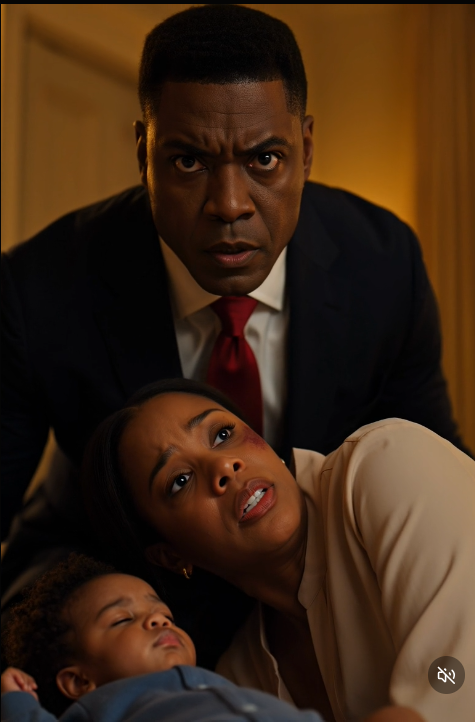
In the luxurious Shevchenko mansion in Kyiv, silence filled the air, broken only by the faint hum of the heating system. Outside, the wind howled against the windows, but inside it was warm—too warm for Anna, who had not sat down for fourteen hours. Her turquoise maid’s uniform was wrinkled, and the yellow gloves hid the trembling of her hands, which still ached. Anna had long ago learned to keep her head down and stay quiet whenever tension hung over the house.
But tonight was different.
On a thin white blanket spread directly across the carpet, the twins slept—tiny babies dressed in matching blue onesies. They had just turned three months old and seemed far too fragile for this world, despite the warmth of the house. Anna knelt beside them, watching their tiny chests rise and fall in perfect rhythm.
When she took this job six months ago, she had been told that her duties would only involve cleaning. But the truth surfaced within a week. Nannies never stayed long in this house. One had quit, and no replacement was hired.
It was easier to dump everything onto Anna than to find someone else.
The twins’ mother had died three months earlier during childbirth, leaving behind two little boys who would never know her warmth. People in the house spoke of her only in whispers, with reverence, as if speaking too loudly might disturb her memory. Their father, Alexei Shevchenko, was a man whose name echoed across stock markets and whose voice could silence entire conference halls.
But to his children, he was nothing more than a shadow.
That evening, the twins had cried for nearly an hour. Anna had tried everything—bottles, rocking them, softly singing lullabies in her native language.
One of the babies was burning with fever, clenching his tiny fists in discomfort. The other cried until his voice turned hoarse. By the time they finally settled down, Anna’s back ached and her hands trembled from exhaustion.
A lamp in the living room cast a soft golden glow over the carpet. Anna could not bring herself to take the babies back to their cold nursery with its stiff mattresses.
Instead, she stayed with them in the warmth of the living room, settling directly onto the carpet so they would not be alone. Her head rested on her arm just inches away from the boys. She could feel their warmth and hear their gentle breathing.
Exhaustion came over her in waves, but Anna forced herself to stay awake.
If the babies stirred, she needed to be ready.
Her thoughts drifted back to the shouting she had heard upstairs earlier that evening, the sharp slam of a door, the heavy footsteps. This house seemed to consume kindness, leaving only tension in every corner.
Anna worried about what that would mean for the twins as they grew up here.
She had worked in many homes, but these children had awakened something special inside her—a fierce, protective instinct. Maybe it was the way they clung to her shirt or how they calmed down at the sound of her whisper.
They had no one but her.
And she had no intention of letting them down.
But her body was betraying her. Hours of cleaning, caring for the babies, and skipping dinner had pushed her beyond her limits.
Her eyelids grew heavier and heavier.
She promised herself she would close her eyes for only a moment to gather strength.
The house was too quiet to warn her.
The door opened without a sound.
Fast, confident footsteps entered the living room.
Alexei Shevchenko froze in the doorway.
His flawless dark navy suit and crimson tie contrasted sharply with his crisp white shirt. A briefcase hung from one hand while the other still rested on the doorknob.
His gaze locked onto the scene before him.
The maid lying on the floor beside his children.
The twins sleeping on the carpet, their rosy cheeks pressed together.
“What the hell is going on here?”
Anna jerked awake.
Her eyes flew open as she sat up, glancing from Alexei to the twins.
One of the babies stirred and let out a quiet whimper.
“I asked you a question.”
Alexei’s voice grew even sharper as he stepped into the room.
“Why are my children lying on the floor? And why are you lying next to them like—”
He stopped.
His eyes settled on the bruise on her face.
“What happened to your face?”
Anna opened her mouth, but the words tangled together.
“They were crying,” she finally managed. “No one came. They needed—”
“That’s what a nanny is for,” he interrupted coldly.
“There is no nanny,” Anna replied firmly but quietly, meeting his gaze. “There’s only me.”
Something flashed across his face, though his voice remained icy.
“We’ll discuss this in my office. Now.”
Anna looked at the sleeping twins, and her heart tightened.
She had no idea that this conversation would uncover the truth about why these children had ended up in her care—and where her bruises had come from.
Slowly, her knees aching from hours on the floor, she stood.
Alexei watched her every movement as she carefully stepped away from the babies, trying not to wake them. Their warmth still lingered on her skin—a reminder of why she had stayed.
In his office, the door clicked softly shut.
The dim light from the fireplace cast orange reflections across Alexei’s face, emphasizing the hard lines of suspicion in his expression.
“Explain,” he demanded, slamming his briefcase onto the desk.
Anna took a deep breath. Her hands shook.
“The twins haven’t had proper care for weeks. The last nanny quit, and nobody hired another one. I clean, cook, and take care of them because there’s no one else.
Today one of them had a fever. I couldn’t leave them in that cold nursery.
So I stayed with them where it was warm.”
His jaw tightened.
“That still doesn’t explain why you were lying beside them.”
Anna looked him straight in the eyes despite the trembling in her chest.
“Because I’m exhausted. I work from dawn until night. I haven’t eaten since this morning. They finally stopped crying and I…”
She swallowed hard.
“I didn’t mean to fall asleep. But I would do it again if it helped them feel safe.”
The expression on Alexei’s face changed.
His anger gave way to something heavier.
“And the bruise?” he asked.
Anna unconsciously touched her cheek.
“One of your guests,” she answered quietly. “Last week, during the party. I was carrying a tray through the hallway.
He said I was in his way and shoved me.
I fell.
No one noticed.
Or maybe they did notice and simply didn’t care.”
Alexei leaned back, gripping the edge of his desk.
He remembered that night—the clinking glasses, the laughter, the parade of so-called friends.
He had been upstairs closing a business deal over the phone.
He hadn’t seen it.
Or perhaps he hadn’t wanted to see it.
“You should have told me,” he murmured.
Anna’s voice trembled.
“Would it have changed anything?
You don’t even notice them, Mr. Shevchenko.
You don’t see your sons.
They only have me.
And I’m nobody here.
Just the help.”
Silence hung in the air.
Alexei turned toward the window, the fireplace reflecting in his eyes.
His thoughts raced.
The image of his late wife.
The twins’ first cries.
All those days he had buried himself in work to avoid feeling the emptiness her death had left behind.
Finally, he spoke.
“Stay here.”
He abruptly left the office.
Anna stood frozen, unsure what he meant.
A moment later she heard his footsteps again.
Alexei returned carrying two small blue blankets from the nursery.
Without saying a word, he covered the sleeping twins, carefully tucking the blankets around their tiny bodies.
Anna watched from the doorway.
For the first time, she saw him kneel beside them.
“They’re smaller than I remember,” he said quietly.
His hand hovered above their heads as though he was afraid to touch something so fragile.
Anna stepped closer.
Her voice was gentle but firm.
“They need you, not just your name on their birth certificates.”
Alexei looked up.
For a moment, his face reflected the full weight of everything he had missed.
“I was a coward,” he admitted.
His voice cracked.
“I thought if I drowned myself in work, I wouldn’t feel the pain of losing her.
But it cost them more than I ever imagined.”
When he stood, his tone had changed.
No longer sharp.
Steady.
Determined.
“From this moment on, things will be different.
You will never have to scrub floors in this house again unless you want to.
You will become their official nanny with the salary that position deserves.
And the man who dared to lay a hand on you…”
His eyes narrowed with steel-hard resolve.
“He will never set foot in this house again.”
Anna froze.
Her chest tightened with surprise.
“Why?” she asked softly.
“Because you protected my children when I didn’t.
And I refuse to fail them—or you—ever again.”
Over the following weeks, the Shevchenko mansion began to come alive.
The cold walls that had absorbed loneliness seemed to thaw beneath the warmth of change.
Alexei started appearing at breakfast, sitting at the table with the twins.
He read children’s books to them, his deep voice becoming gentle as the babies reached toward the colorful pictures, too young to understand the words.
Watching this, Anna felt the tension leave her shoulders for the first time in months.
Her laughter became more frequent—not out of obligation, but out of genuine happiness.
The twins seemed to sense the change as well.
Their fussiness faded, replaced by curious looks and tiny hands that reached for either Anna or Alexei.
The house no longer resembled a museum filled with marble floors and cold hallways.
It was becoming a real home.
A place filled with voices, laughter, and even the occasional cries of babies that no longer seemed frightening.
One rainy afternoon, Anna sat on a soft couch in the living room, holding the twins in her arms.
One drowsily rested against her shoulder while the other tugged at the edge of her sweater, making quiet, funny sounds.
Rain tapped against the tall windows, but the room felt warm and cozy.
The door creaked open.
Alexei appeared earlier than usual.
His jacket hung casually over one shoulder, and his hair was slightly tousled by the wind.
He stopped and looked at the scene before him.
A faint smile touched his lips.
“Is there room for one more?” he asked.
There was no usual strictness in his voice.
Only warmth.
Anna nodded.
He sat beside her, carefully lifting the twins onto his lap.
One immediately grabbed his finger.
The other buried his face against Alexei’s chest as though seeking protection.
Anna leaned back against the couch and finally allowed herself to breathe.
For the first time in months, she felt she could simply exist—not as a maid, not as a nanny, but as a person who mattered to these children.
That evening, after the rain had stopped and a gentle silence settled over the house, all four of them fell asleep in the same room.
Not because they had to.
Because they wanted to.
Anna slept on the couch.
The twins rested in their cribs pulled closer to the fireplace.
Alexei sat in an armchair opposite them, an open book resting on his lap.
His eyes slowly closed.
The book slipped to the floor.
But the changes did not stop within the mansion’s walls.
Alexei began investigating what had truly been happening in his home.
He summoned the estate manager and demanded to know why nobody had informed him that there was no nanny and why Anna had been forced to shoulder so many responsibilities.
The answers were evasive.
But Alexei was not a man who accepted half-truths.
He reviewed records, spoke with other employees, and eventually uncovered the truth.
The manager, trying to save money, had deliberately chosen not to hire a replacement nanny, dumping all the work onto Anna, who was already exhausted.
Alexei fired him that same day.
A trusted replacement took over with one clear instruction:
“The children come first in this house.”
Anna received not only a new position but also a team of assistants so she could focus on the twins without exhausting herself cleaning and cooking.
Her salary increased.
More importantly, she felt respected—not only by Alexei, but by the entire staff.
One evening, after the twins had gone to sleep, Alexei invited Anna into his office.
She entered expecting a serious conversation.
Instead, he handed her a small box.
“This is for you,” he said awkwardly. “For everything you’ve done.”
Inside was a simple yet elegant bracelet.
It wasn’t flashy, but it carried a delicate engraving—two small hearts symbolizing the twins.
Anna froze.
“I can’t accept this,” she began.
But Alexei shook his head.
“This isn’t payment.
It’s gratitude.”
A month later, the house had completely transformed.
Anna no longer wore a maid’s uniform. Instead, she dressed comfortably, able to play with the twins and take them on walks through the garden.
Alexei spent more time at home, sometimes even canceling meetings so he could have dinner with his sons.
He learned how to be a father.
He changed diapers.
Awkwardly sang lullabies.
Laughed when one of the babies accidentally smeared purée across his shirt.
One sunny day, Anna and Alexei took the twins for a walk in a nearby park.
They moved slowly beside the stroller while the babies happily cooed and waved their tiny hands.
Passersby smiled at the unusual family—a wealthy businessman carrying a baby bottle and a young woman whose love for the children was visible in every gesture.
At that moment, Anna realized this house was no longer just her workplace.
It was her home.
Her family.
Not because of documents or titles.
But because of what truly mattered—love, care, and being present during life’s hardest moments.
For the twins, the cold and lonely days of the past faded into the warmth of new memories.
And for Alexei and Anna, the lesson remained forever:
Family is not about titles or roles.
Family is about the people who stay beside you when it matters most.
That evening, after returning home, they gathered once again in the living room.
The twins slept peacefully beneath warm blankets.
Alexei looked at Anna and quietly said,
“Thank you for teaching me how to be a father.”
Anna smiled, her eyes shining in the glow of the fireplace.
“And you taught me to believe that change is possible.”
And in the house where coldness and loneliness had once ruled, there was now laughter, warm voices, and the gentle breathing of two little boys who had finally found their home.
Related Post
Every Woman My Widowed Father Dated Vanished Overnight – So I Asked My Friend to Go on One Date With Him
Every woman my father dated seemed excited about seeing him again, only to disappear before [...]
I left a starving Pit Bull puppy on my mother’s doorstep at 5 a.m. on a Tuesday, then sped away without a word. For an entire year, I let her believe it was a random act of a stranger. When I finally confessed the truth, she sat on her kitchen floor and wept for forty-five minutes before uttering a single sentence I’ll never be able to forget.
The Weight of a Quiet Threshold I spent months attempting to navigate the silence of [...]

My Husband Passed Away on Our 28th Anniversary – A Few Days Later, My Daughter Came to Me and Said, ‘Mom, Dad Left This Under My Apartment Door the Day Before He Was Gone’
I thought losing my husband on our anniversary would be the hardest moment of my [...]